
Lightweight DroneCAN / UAVCAN v0 node toolkit built on top of libcanard, platform_specific and libparams. It wraps the transport, exposes a small C API for node setup/spin, and offers C++ helpers for typed publishers/subscribers and logging.
- Implements core DroneCAN services out of the box: NodeStatus, GetNodeInfo, Param.GetSet and Param.ExecuteOpcode, RestartNode, and GetTransportStats.
- Platform abstraction (
include/libdcnode/platform.hpp) so you can plug in your own timing, reset, unique-ID, and CAN driver callbacks. - Templated C++ wrappers for publishing/subscribing (
include/libdcnode/pub.hpp,include/libdcnode/sub.hpp) with optional filters and periodic senders; legacy interfaces remain ininclude/libdcnode/publisher.hppandinclude/libdcnode/subscriber.hpp. - Debug logger (
include/libdcnode/logger.hpp) that publishesuavcan.protocol.debug.LogMessagewith severity helpers. - DSDL compiler baked into the build (
Libs/dronecan_dsdlc) so message code is generated during CMake configure.
- C/C++ toolchain with C++17, CMake >= 3.15, Python 3 (for tests/tools).
- Linux SocketCAN stack and
iputilities (used byscripts/vcan.sh). can-utils(for monitoring) anddronecan_gui_toolare handy when playing with the examples.
Set up the Python deps (used by the DSDL generator and tests):
python3 -m venv .venv && source .venv/bin/activate
pip install -r requirements.txt
Then wire the library into your project:
add_subdirectory(libdcnode)
target_link_libraries(my_app PRIVATE libdcnode::libdcnode)
During configure, DSDL code is generated into build/generated/libdcnode/serialization using Libs/dronecan_dsdlc/dronecan_dsdlc.py. If you add custom DSDL namespaces, point DSDL_IN_DIR (see CMakeLists.txt) to your set or rerun scripts/code_generation.sh with your paths.
Provide the platform and params hooks from include/libdcnode/platform.hpp and include/libdcnode/params.hpp in your application; the Ubuntu example shows minimal implementations.
Number of subscribers is limited by parameter DRONECAN_MAX_SUBS_NUMBER in file include/libdcnode/dronecan.h to 15. You may modify this parameter for further development, however note that size of each subscriber is limited to 16 or 24 bytes depending on 32 or 64 bit device.
The examples/ubuntu target demonstrates the C API plus the modern C++ pub/sub wrappers end-to-end.
# Prepare a virtual CAN iface once (uses sudo):
scripts/vcan.sh slcan0

# Build and run the example:
make ubuntu
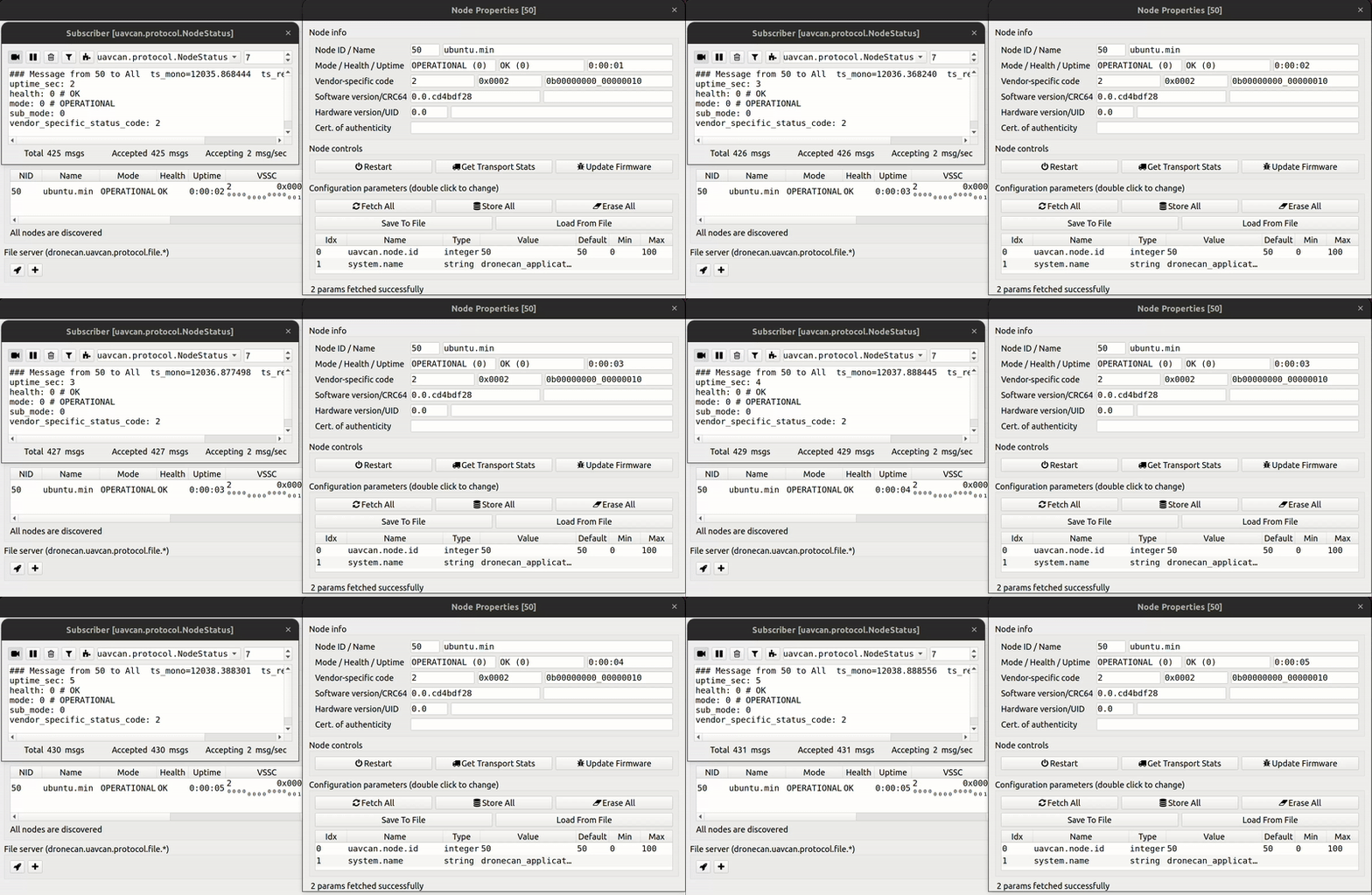
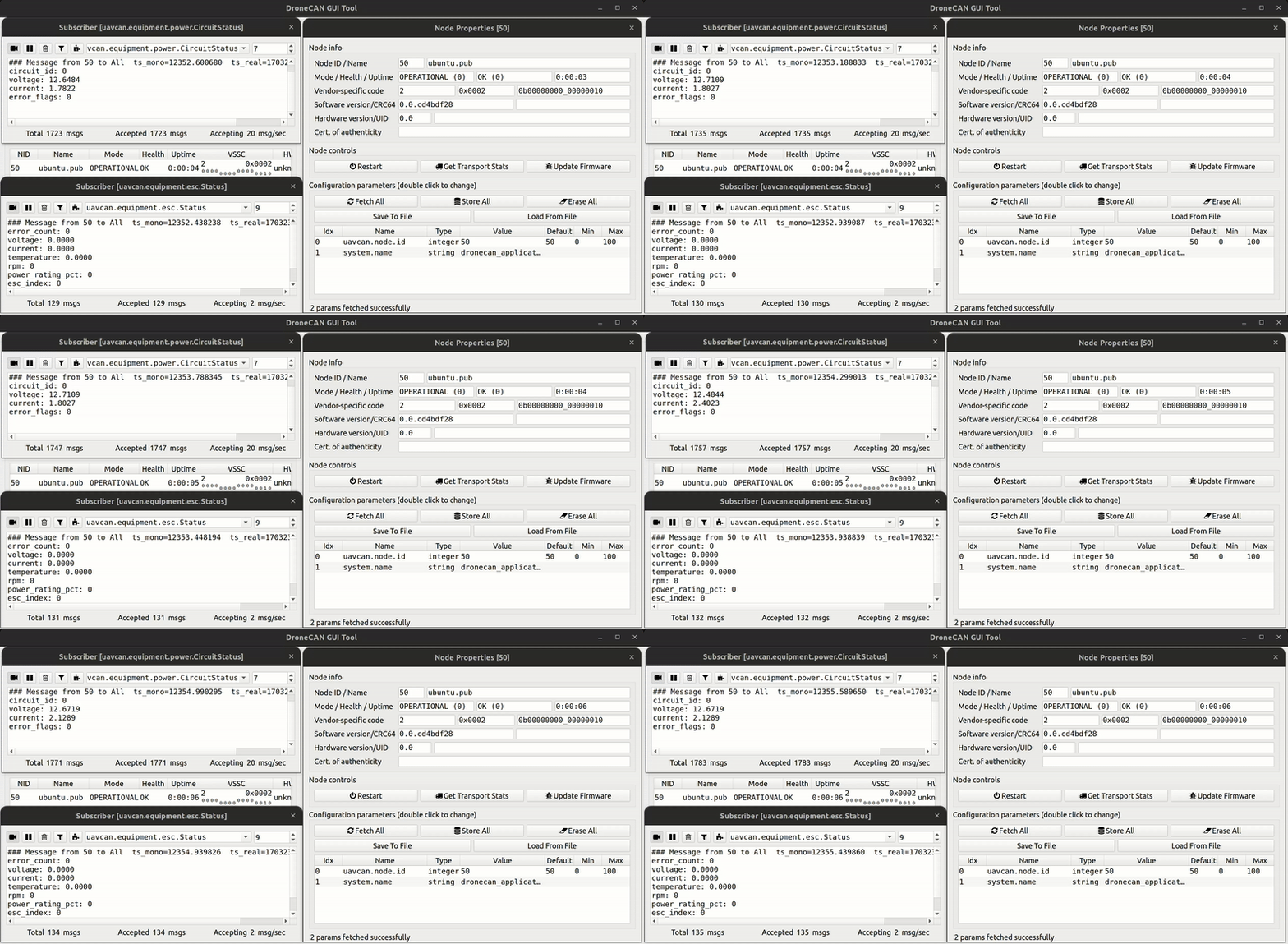
What it does: sets uavcan.node.id (default 50) and system.name, wires platform callbacks (time, restart request, UID, CAN driver) in examples/ubuntu/main.cpp, subscribes to esc.RawCommand/actuator.ArrayCommand/indication.LightsCommand, and publishes periodic equipment.power.CircuitStatus + equipment.power.BatteryInfo while serving NodeStatus/GetNodeInfo.
In gui_tool you will see:
python3 -m venv .venv && source .venv/bin/activate
pip install -r requirements-dev.txt
scripts/vcan.sh slcan0  # once, requires sudo
pytest tests/smoke_socketcan.py
The smoke tests expect the Ubuntu example (node ID 50 on slcan0) to be running; they verify NodeStatus and GetNodeInfo responses via the dronecan Python client.
| Version | ReleaseDate | Note |
|---|---|---|
| v0.7.0 | 2025-12-28 | Added DSDL ser/des generator |
| v0.6.0 | 2025-10-17 | Build model changed: standalone library; platform hooks provided by user (no more source-include mode). |
| v0.5.0 | 2024-09-26 | Decoupled the platform specific functions from the library |
| v0.4.0 | 2024-07-29 | Added macro helpers for pub and sub traits |
| v0.3.* | 2024-01-06 | Incremental serialization additions |
| v0.2.0 | 2024-01-06 | Add bxcan and fdcan drivers |
| v0.1.0 | 2023-12-22 | First public drop; pure C, manual serialization, and source-include usage (include the C sources into your app). |
The software is distributed under term of MPL v2.0 license.