| No | Name | Responsibility | Contributions |
|---|---|---|---|
| 12010704 | Zhang Zekai | main architecture, pipeline | 33.3333333% |
| 12010602 | Mo Yancheng | assembly source files | 33.3333333% |
| 12010620 | Lai Jianyu | io | 33.3333333% |
| Version | Date | Description |
|---|---|---|
| v0.1 | May 13, 2022 | Single-cycle cpu |
| v1.0 | May 17, 2022 | The first version of multiple-cycle cpu |
| v1.1 | May 19, 2022 | Fix some internal logical bugs and run the led-switch test successfully |
| v1.2 | May 23, 2022 | Broaden the width of io wires to 32 bits |
| v1.2.1 | May 24, 2022 | Fix the bugs for bne and beq |
| v1.3 | May 25, 2022 | Add support for mfhi, mflo, mthi, mtlo, mul, mulu |
| v1.4 | May 25, 2022 | Add support for uart |
| v1.5 | Jun 1, 2022 | Add support for 7-seg tube, keyboard and VGA |
| v1.6 | Jun 2, 2022 | Final version |
R format: sll, srl, sllv, srlv, sra, srav, jr, add, addu, sub, subu, and, or, xor, nor, slt, sltu, mfhi, mflo, mthi, mtlo, mult, multu
I format: beq, bne, lw, sw, addi, addiu, slti, sltiu, andi, ori, xori, lui
J format: jump, jal
0-31 registers, pc, hi and lo register.
All registers are 32-bit in width.
Von Neumann architecture is adopted, and therefore the instruction memory is separate from the data memory.
Instruction memory: 64kb
Data memory: 64kb
Address unit: byte
Address for IO:
| IO name | type | range | function |
|---|---|---|---|
| switches | input | FFFF FXXX$^1$ | input the bits CPU needs read |
| mini keyboard | input | FFFF EXXX | input the bits CPU needs read |
| led | output | FFFF FXXX | show the data from CPU |
| 7 segment tube | output | FFFF FXXX | show the data of the mini keyboard |
| VGA | output | FFFF F000 ~FFFF F960 | show more data from CPU with promotion hint and stored data for test case |
- Multiple-cycle CPU with classic 5-stage pipeline: instruction fetching, instruction decoder, execution, memory access, write back.
- Solve data hazards by forwarding and stall: A load-use data hazard requires one stall. For other types of data hazards, the pipeline does not need to be paused thanks to the forwarding mechanism.
- Solve control hazards by prediction: The prediction strategy we use is that CPU will always execute the very next instruction (pc+4).
- clock
- 4 buttons
- 24 switches
- 24 leds
- 7-seg display
- keyboard
- uart
- VGA
module cpu(
    input I_clk_100M, // clock
    input I_rst, // reset
    input [23:0] I_switches, // switches

    input I_rx, //  receive data by uart
    output O_tx, // send data by uart
    input start_pg, // used to start communcation mode

    input [3:0] I_keyboard_cols, //keyboard
    output [3:0] O_keyboard_rows, //keyboard

    output [23:0] O_leds, // leds
    output [7:0] O_seg_en, // seven segment digital tube enable signal
    output [7:0] O_num, // seven segment digital tube

    input I_clear, // button that clear the buffer of keyboard
    input I_commit, // button that commits the buffer of keyboard

    output O_hs, // hsync signal
    output O_vs, // vsync signal
    output [11:0] O_rgb444 // rgb
); This module makes a prediction for the coming pc value.
module ifetch(
    input [31:0] I_pc, // current value in pc register
    output [31:0] O_next_pc // prediction of value for next pc
);This module extract fields from the instruction, and get necessary register values to get prepared for the next few stages.
module decoder(
    input [31:0] I_instruction, // instruction

    input I_rs_can_forward, // 1 indicates data in rs can be forwarded, 0 otherwise
    input I_rt_can_forward, // 1 indicates data in rt can be forwarded, 0 otherwise
    input I_rs_should_stall, // 1 indicates a stall should be added to obtain the data in rs
    input I_rt_should_stall, // 1 indicates a stall should be added to obtain the data in rt
    input [31:0] I_rs_forward_data, // data in rs, obtained by forwarding
    input [31:0] I_rt_forward_data, // data in rt, obtained by forwarding

    input [31:0] I_rs_data, // current data in rs
    input [31:0] I_rt_data, // current data in rt

    output [31:0] O_imm_extended, // signed or unsigned extended immediate

    // correct content in rs and rt register,
    // either forwarded or normally read
    output [31:0] O_rs_data, // correct data in rs, either from current rs or by forwarding
    output [31:0] O_rt_data, // correct data in rt, either from current rt or by forwarding

    input [31:0] I_pc_plus_4, // pc+4
    output [31:0] O_pc_plus_4, // pc+4

    // extracted from the instruction
    output [4:0] O_rs, // rs
    output [4:0] O_rt, // rt
    output [4:0] O_rd, // rd
    output [4:0] O_shamt, // shift amount
    output [5:0] O_opcode, // opcode
    output [5:0] O_funct, // funct

    output O_should_stall, // 1 indicates the pipeline should stall, 0 otherwise

    output [31:0] O_jump_target // jump address for j, jal and jr
);This module will do some arithmetic and logical operations, and check whether the branch prediction is correct or not.
module exe(
    input [31:0] I_rs_data, // data in rs
    input [31:0] I_rt_data, // data in rt
    input [31:0] I_imm_extended, // signed or unsigned extended immediate
    input [4:0] I_shamt, // shift amount

    input [5:0] I_opcode, // opcode
    input [5:0] I_funct, // funct
    input [31:0] I_pc_plus_4, // pc+4
    output [31:0] O_addr_result, // branch address for bne, beq
    output reg [31:0] O_alu_result, // alu result

    input [31:0] I_jump_target, // jump address for j jal jr
    output [31:0] O_corr_target, // correct jump/branch address
    output O_corr_pred, // 1 indicates that branch prediction is correct, 0 otherwise

    // possible destination regs
    input [4:0] I_rt, // rt
    input [4:0] I_rd, // rd

    output [4:0] O_dest_reg, // destination reg

    output O_reg_write, // 1 indicates the insturction need to write registers, 0 otherwise
    output O_is_lw, // 1 indicates the instruction is lw, 0 otherwise
    output [31:0] O_mem_write_data, // data written to memory

    output O_hi_write, // 1 indicates the insturction need to write hi, 0 otherwise
    output O_lo_write, // 1 indicates the insturction need to write lo, 0 otherwise
    output reg [31:0] O_hi_write_data, // data written to hi
    output reg [31:0] O_lo_write_data, // data written to lo

    input [31:0] I_hi_read_data, // data read from hi
    input [31:0] I_lo_read_data // data read from lo

);This module is actually what we call memorio. It will direct the output in the last stage(exe) to either io or data memory modules.
module mem(
    input [31:0] I_addr, // address
    input [31:0] I_alu_result, // alu result from the exe module
    input [31:0] I_m_read_data, // data read from memory
    input [31:0] I_io_read_data, // data read from io
    output [31:0] O_reg_write_data, // data written to registers

    input [4:0] I_dest_reg, // destination register
    output [4:0] O_dest_reg, // destination register

    input [5:0] I_opcode, // opcode
    input [5:0] I_funct, // funct

    input [31:0] I_write_data, // data to write
    output [31:0] O_write_data, // data to write
    output O_m_write, // 1 indicates the instruction need to write memory, 0 otherwise
    output [31:0]  O_m_addr, // memory address

    output O_io_write, // 1 indicates the instruction need to write io, 0 otherwise

    output O_reg_write // 1 indicates the insturction need to write registers, 0 otherwise

);The registers will be written in this stage, if necessary.
module wb(
    input [5:0] I_opcode, // opcode
    input [5:0] I_funct, // funct
    input [31:0] I_write_data, // data written to registers
    input [4:0] I_dest_reg, // destination register

    output O_reg_write, // 1 indicates the insturction need to write registers, 0 otherwise
    output [31:0] O_write_data, // data written to registers
    output [4:0] O_dest_reg // destination register
);The decoder needs to obtain values from registers according to the instruction. And this module can forward data to the need stages.
module forward(
    input I_ex_reg_write, // 1 indicates that instruction in the exe stage need to write registers, 0 otherwise
    input I_ex_is_lw, // 1 indicates that instruction in the exe stage is lw, 0 otherwise
    input [4:0] I_ex_dest, // destination register for the instruction in the exe stage

    input I_mem_reg_write, // 1 indicates that instruction in the mem stage need to write registers, 0 otherwise
    input [4:0] I_mem_dest, // destination register for the instruction in the mem stage

    input I_wb_reg_write, // 1 indicates that instruction in the wb stage need to write registers, 0 otherwise
    input [4:0] I_wb_dest, // destination register for the instruction in the wb stage

    input [31:0] I_ex_data, // data in the exe stage
    input [31:0] I_mem_data, // data in the mem stage
    input [31:0] I_wb_data, // data in the wb stage

    input [4:0] I_reg_src, // register that needs forwarding

    output reg O_can_forward, // 1 indicates the register can be forwarded, 0 otherwise
    output reg O_should_stall, // 1 indicates the pipeline should have a stall, 0 otherwise
    output reg [31:0] O_forward_data // data forwarded

);0-31 registers
module regfile(
    input I_clk, // cpu clock
    input I_rst, // system reset
    input [4:0] I_read_src1, // read source register
    input [4:0] I_read_src2, // read source register
    input [4:0] I_write_dest, // write destination register
    input [31:0] I_write_data, // data to write
    output [31:0] O_read_data1, // data read from I_read_src1 register
    output [31:0] O_read_data2, // data read from I_read_src2 register
    input I_reg_write // 1 enables writing registers
);hi and lo registers
module hilo(
    input I_clk, // cpu clock
    input I_rst, // system reset
    input I_hi_write, // 1 enables writing hi register
    input I_lo_write, // 1 enables writing lo register
    input [31:0] I_hi_write_data, // data to write to hi
    input [31:0] I_lo_write_data, // data to write to lo

    output [31:0] O_hi_read_data, // data read from hi
    output [31:0] O_lo_read_data // data read from lo
);module led(
input I_clk, // cpu clock
input I_rst, // system reset
input I_write, // 1 enables writing led regs
input [23:0] I_write_data, // data to write to led regs
output [23:0] O_led_data // data read from led regs
);module dmemory (
input I_clk, // cpu clock
input [31:0] I_addr, // memory address
input [31:0] I_write_data, // data to write to memory
input I_m_write, // memory write enable
output [31:0] O_read_data, // data read from memory
input I_upg_rst, // UPG reset (Active High)
input I_upg_clk, //UPG ram_clk_i (10MHz)
input I_upg_wen, //UPG write enable
input [13:0] I_upg_adr, //UPG write address
input [31:0] I_upg_dat, //UPG write data
input I_upg_done //1 if programming is finished
);module anti_shake_single(
input I_key,//input signal
input I_clk,//clock
input I_rst_n,//reset signal
output O_key//signal after anti shake treatment
);module keyboard_top(
input I_clk_25M, //clock of 25MHz
input I_rst, //reset signal
input I_commit, //commit the current data to io read data
input [3:0] I_keyboard_cols, //keyboard
output [3:0] O_keyboard_rows, //keyboard
output [31:0] O_display, //the data showed in the seven segment tube
output [31:0] O_read_data //the data commit to io read data
);module seven_seg(
input I_clk, //clock
input I_rst, //reset
input I_write, //I write
input [31:0] I_write_data, //the data need to represent
output reg [7:0] O_num, //seven segment digital tube
output reg [7:0] O_seg_en //seven segment digital tube enable signal
);module vga(
input I_clk_25M, // clock of 25MHz
input I_rst_n, // reset, negative active
output reg [11:0] O_rgb444, // rgb
output reg O_hs, // hsync
output reg O_vs, // vsync
input [11:0] I_pixel_data, // pixel data
output [9:0] O_pixel_x, // X coordinate
output [9:0] O_pixel_y // Y coordinate
);Generate text on screen using VGA text mode.
module text_gen(
    input I_clk, // clock
    input [9:0] I_pixel_x, // X coordinate
    input [9:0] I_pixel_y, // Y coordinate
    output [11:0] O_pixel_data, // pixel data

    output [11:0] O_vga_ram_addr, // vga ram address
    input [15:0] I_vga_ram_data // data from vga ram
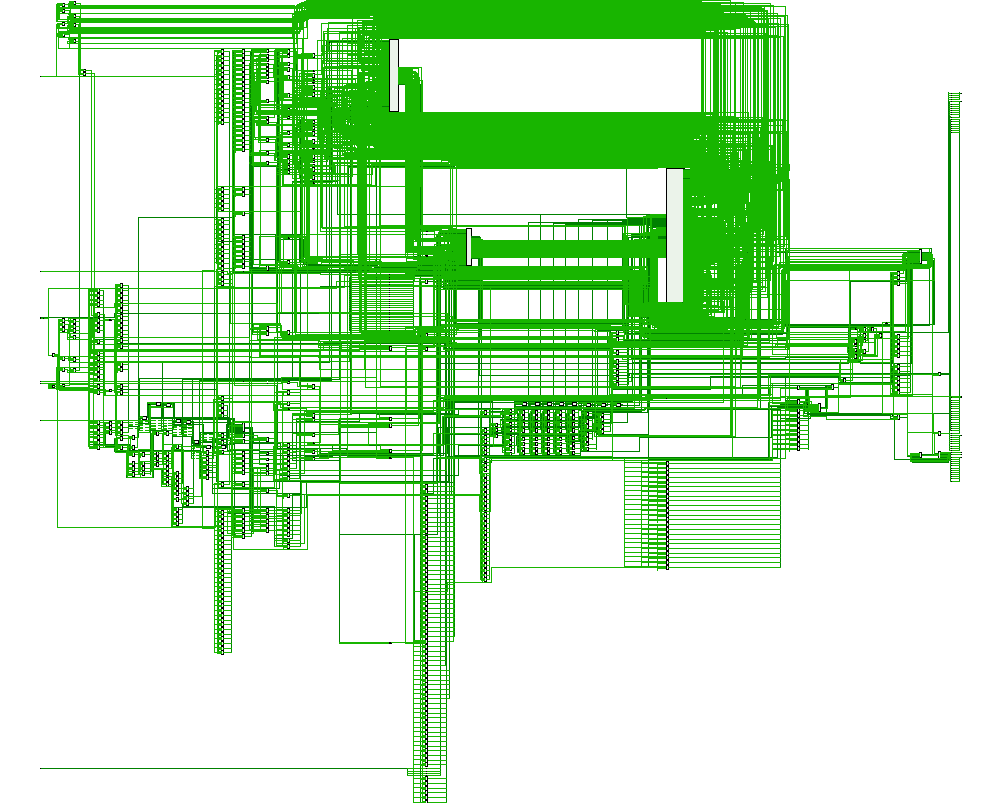
);
| num | method | type | describe | result |
|---|---|---|---|---|
| 1 | using development board | integrate | test case 1 | pass |
| 2 | using development board | integrate | test case 2 | pass |
| 3 | using development board | integrate | test for mult | pass |
| 4 | using development board | integrate | test for multu | pass |
| 5 | using development board | unit | test for stall | pass |
We pass the test case 1 and test case 2 to check the basic function for the CPU and corresponding IO devices. After that, we test the additional ISA include mfhi, mflo, mthi, mtlo, mult, multu. In the end, we use unit test to check the stall function for the pipeline CPU.
All in all, all the output of the tests is the same with our expectation.
-
How to schedule the timing of the pipeline cpu?
There are 5 stages in the pipeline design. Our solution is that operations that needs to be performed in each stage are promised to complete in the first half cycle. And then outputs of the current stage will be passed to the next stage at
negedge. -
The shaking sign from switches and mini keyboard will make bug
We use a button to “commit” the information from the input devices to the CPU.
If the commit button is hit, the information stored in the input device will commit to the CPU.
If the commit button has not been hit, the information from the input device to the CPU will be the same with the last information was sent to the CPU
-
It is hard to debug for asm files
We use the thought like unit test to debug. We first test separate function in the asm and then find the location the bug.